
Introduction
A chargeback occurs when a customer disputes a charge and requests a refund through their card issuer. Merchants (districts or schools) have the opportunity to dispute chargebacks by following specific processes defined by card associations, issuing banks, and acquiring banks. Successfully contesting chargebacks requires attention to detail and adherence to strict timelines.
This guide explains how to manage the chargeback lifecycle, submit required documents, and track disputes effectively using the Merchant Dashboard and associated tools.
Submitting Documents
Merchants must upload supporting documents to the MerLink Portal within 10 days of receiving a chargeback notification. MerLink is used to manage and respond to disputes.
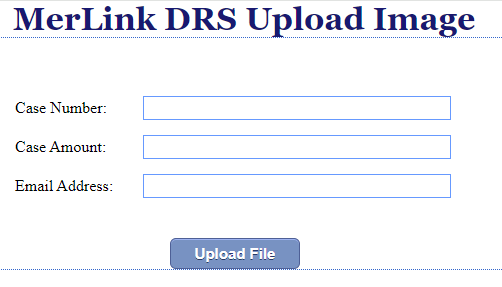
How do I know if my documents have been submitted successfully?
When documents are successfully uploaded, a confirmation message will appear on the screen.
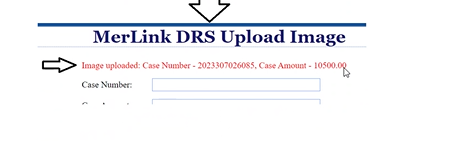
Will I receive an email confirmation for successfully submitted documents?
No. There is no email notification provided for successful document submission.
Will the bank or credit card company notify me about the chargeback status?
No. The issuing bank or credit card company does not send status updates directly to merchants during the dispute process.
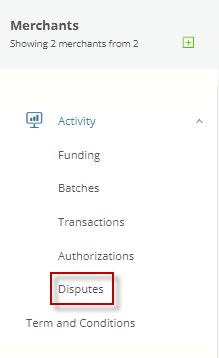
Tracking Chargebacks on the Merchant Dashboard
The Merchant Dashboard includes a dedicated section for tracking chargebacks. This section provides important details, including:
- Merchant ID (MID)
- DBA Name
- Date
- Date Files
- Date Resolved
- Case Number
- Card Type
- Amount of Dispute
- ARN
- Auth #
- REASON CODE
- Transaction Date: This is the date of the original transaction.
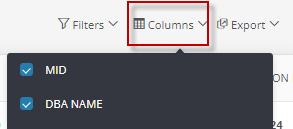
To customize your view, use the column settings to remove unnecessary data fields. This allows you to focus on the most relevant information for managing your disputes.
Tracking your disputes on the Merchant Dashboard
Using the information from the Dispute Type column and the AUTH #, you can track some of the details of the lifecycle of your chargeback.
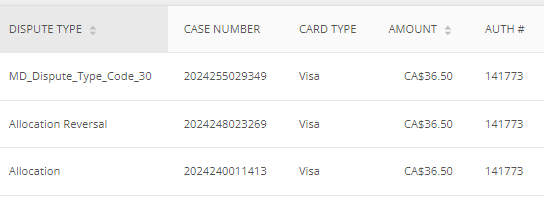
The common reference number is the Authorization Number (AUTH #) which will stay the same for the lifecycle of a chargeback. Any time there is money movement or an action, the case number will change on the merchant dashboard.
For each individual dispute the status of the dispute depends on the “Dispute Type”, which describes the chargeback status at each stage of the lifecycle for every case.
Note
The common reference for one chargeback is the AUTH# number.
Dispute Lifecycle by Card Type
VISA – Authorization & Fraud Related Dispute
- Allocation Dispute: Visa new chargeback in the Allocation flow
- Allocation Pre-Arbitration: Visa pre-arb is sent to issuer directly, without debiting merchant and without a rebuttal provided by merchant (for example, the system recognized an existing credit and used the credit’s data to challenge the chargeback).
- Allocation Arbitration: Visa Allocation PreArbitration. Visa ruling on case.
- Allocation Reversal: Visa Merchant attempt to rebut Allocation Dispute
- Allocation Reversal Pre-Arbitration: Visa Merchant rebuttal documentation submitted
- Allocation Reversal Arbitration: Visa’s ruling on case.
VISA - Processing Error and Consumer Dispute
- Collaboration Dispute: Visa New chargeback in Collaboration flow (Processing Error and Consumer Dispute)
- Collaboration Reversal: Visa Merch attempt to rebut Collaboration Dispute
- Collaboration PreArbitration: Visa Issuer’s escalation after a rebuttal, in Collaboration flow
- Collaboration Arbitration Ruling: Visa ruling of chargeback case
MasterCard: General Chargebacks
- First Chargeback: Initial dispute filed by the customer.
- First Reversal: Merchant rebuttal of the chargeback.
- Pre-Arbitration: Issuer escalation following the merchant’s rebuttal.
- Arbitration MasterCard: Chargeback case submitted to MC for review and ruling.
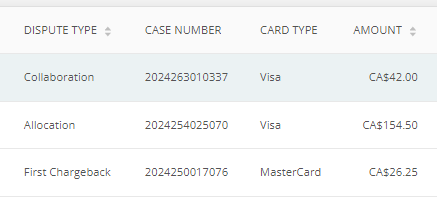
Here is an example of three different types of chargebacks showing on the Merchant Dashboard:
Example: The lifecycle of a chargeback with Authorization Number (AUTH #) 141773.
What Happens Next?
How can you identify the final stage of a chargeback?
The final stage depends on whether the merchant or the consumer prevails in the dispute. If the merchant wins, the process typically ends with a Reversal. If the customer challenges the decision, the case proceeds to Arbitration, the final step in the dispute process.
How do you know if a dispute was resolved in favor of the district/school (merchant)?
The issuing bank does not share much information during the dispute process. When a payee disputes a charge, the disputed amount is debited to the merchant (district or school). Once the issuing bank has made a final decision, if in favor of the merchant, they will return the funds to the merchant. In the case that the merchant has won the dispute, the cardholder may still challenge the decision and pursue arbitration.
Each card brand has different timeline windows for arbitration. For Visa 30 days, Mastercard 44 days, Discover Card 30 days, etc. If the status has not charged within that time period, and the funds have not been returned to the merchant, then the dispute can be considered lost.
If the merchant has not submitted the supporting documents during the required window of time, they automatically lose.